Blogger Tricks

Jan 28, 2014

"If You Like Your Insurance, You Can Keep It. Period."

Greetings!
In what ways has the USA's obsession with finding faults in leaders hurt our nation?  Identify a leader in US History who has been wrongfully (or too severely) vilified and theorize as to what might have been had that particular person been able to perform their duties without unreasonable scrutiny.  Feel free to use both current and historic examples, but they must be from the USA.

The above is the prompt that this week's blog post is an answer to. There is a reason I reproduced it here. Hopefully, the reason becomes obvious as one reaches towards the end of the reading. Happy reading! 

As the wise people say, let's dismantle the prompt to bits so that we (I) can answer it better.

The first part is actually a question! That should make it easy to answer straightforward, right? Not! How can one possibly think that the "USA's obsession with finding faults in leaders" has hurt the country? Is obsession the proper word for the need to scrutinize individuals that will hold significant power over the lives of the populace? Therefore, to answer the question, there are no ways whatsoever in which the US has been hurt in its "obsession" - though need is the correct term - to "find faults" - though scrutinize is the correct term - with its leaders. To the contrary, it is this very characteristic that has kept this nation at the position that it is for this long.

When people decide that certain individuals should, not forced but by their own choice, take care of affairs that are impossible to be done collectively, they gain an automatic right to scrutinize to the level necessary to their well being and to the assurance that those individuals are holding true to the desired ideals. And for that matter there has never been a leader in US history who has been wrongfully vilified by the people.


  That standing, through the expanse of American history, there have been several presidents who have faced it rough, not from the people - as the implicit interpretation of the word - but rather from competitors, political opponents and those that just feel contempt at first sight without reason.( Several newspapers fall in the latter category). It is surprising in a way that those that have been called unrepeatable names are usually the more competent of their counterparts. The list follows:


  • A New York newspaper referred to Abraham Lincoln as "the baboon on the other side of the avenue" and went ahead to suggest that he be bought and "displayed as a zoological curiosity." The attacks on Lincoln's character, looks and policies were - to quote the prompt - "wrongfully vilifying".
  • The National Gazette and Aurora, two newspapers, represented George Washington as "treacherous, arrogant and crooked". They were unhappy with his policies. In fact, the vilification became so intense that he contemplated retiring after the first-term. He was re-elected, however, and gave the shortest inaugural speech in American history with two main points; gratitude for re-election and "if you don't like me, you can impeach me...".
  • Despite his popularity among Americans, FDR was the target of insensitive remarks and editorials throughout his tenure at the White House. In fact, Marquis Child, a columnist in 1938, reported, "No phenomenon of the times is more disturbing than the persistent hatred of President Roosevelt which finds a more and more poisonous expression among a considerable section of the American people...No slander is too vile, no canard too preposterous, to find voice among those who regard the President as their mortal enemy." He was also called a communist and a thief; his flagship New Deal programs called "Red Deal".
All leaders, not only presidents, come with their controversies; be it drugs, extramarital affairs, policies etc. If a person, especially here in the US, decides to become a leader and actually does become a leader, it would do them good to have a thick skin. Leaders will be scrutinized, most times to the good of the nation, and sometimes painted a wrong color, to the disruption of order and wasting of time. A good leader should, therefore, be able to distinguish the expected scrutiny, questioning, inquiry and general pull and push of the public from the negative vile of personal enemies, political opponents and the like.


  

Jan 17, 2014

ICE... ICEMAN WHO?

Throughout literature, we find characters that are "grey" in nature; whose motives in their book-bound lives are so controversial that the readers are plunged in confusion and often times guilt for having read about them. American literature, and more recently TV, is especially marked with such characters. 

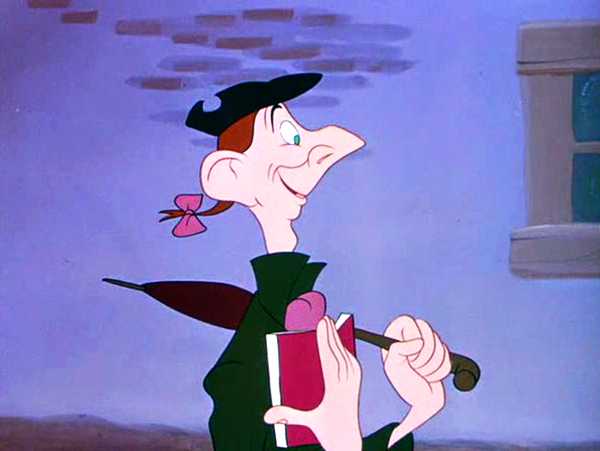
Greetings everyone! Welcome to the first part of several blog posts for APLAC. Today's post is about the above "grey" characters - actually called anti-heroes by the teacher. To help put things in perspective, we'll be discussing Ichabod Crane, from Washington Irving's The Legend of Sleepy Hollow, in comparison to Max Ray Butler aka Iceman - a real-life person as described in Kevin Poulsen's  Kingpin: How One Hacker Took Over The Billion-Dollar Cybercrime Underground.

Comparing a famous character and a little-time cyber criminal known only to the tech world would seem improbable but the two actually do have a lot in common. (In other words, I have less than two hours to finish this post so don't think hard while reading it.)

Ichabod Crane has two shadows in the book. One that strictly enforces the proverbial "spare the rod and spoil the child", teaches psalmody and actively participates in the village's errands and another that was devoid of any motive save for cunningly earned riches and personal gratification. Similarly, Iceman - Max Butler's online handle - at several points in time worked as a white-hat security consultant and programmer by day and an enthusiastic black-hat hacker (I'd prefer the term 'cracker'.) by night.

While discussing white-hats and black-hats, hackers and crackers would seem besides the point, to someone familiar with the cyber-security world, it is obvious that one person cannot belong to two groups simultaneously. It would mean destroying your own home at night and rebuilding it by daylight.


Iceman - wired.com
Another attribute that Crane and Butler seem to share is that of ill-fortune with women. It is no surprise that thousands of man-hours in form of physical and mental work trying to understand women have amounted to....well, nothing. That aside, those two individuals had considerable difficulty in this matter.

For Ichabod, it is not immediately clear what seems to be the problem because Irving ensures to tell us that he had a sizable following among the town's housewives in light of his teaching profession. Further reading, however, shows clearly that Crane wasn't successful with getting the woman he wanted because of malformed priorities. He valued her father's possessions more dearly than her. For all we know, he could have made uncalled-for gestures during the party that led to his disappointment and, ultimately, his disappearance.

For Butler, however, the trouble is that the social world did not function like a computer would. With just a few lines of code and logic, he could crawl the Internet to get what he wanted - be it unreleased episodes of his favorite games or credit card numbers with their full information. Therefore, he lost his high school girlfriend and later on in his adult life, his wife. 

Max Butler could initiate a Distributed Denial of Service attack on any website at whim. He could play around in the Pentagon's Intranet or siphon-off credit card information from a machine inside a fast-food restaurant. But he could also find it his duty to fix gaping bugs in hundreds of thousands of computers.He made the Army's machines invulnerable to protocol breaches and secured countless others that could have been turned to bots had they been left open. He voluntarily gave out findings from his night-long adventures and eased the work of white-hats by being a black-hat. This is one of the traits that Iceman shares with Ichabod; the plenty good among the plenty bad.


Ichabod - cornel1801.com

Ichabod formed and instructed the village choir, held his students accountable to what he believed was the best method for disciplining them and engaged in the work of the townspeople. Whatever his delusions about money and riches, he had some of what is called "good". 

And that is the crux of the matter! ARE THESE PEOPLE GOOD OR EVIL OR NON OF THOSE?